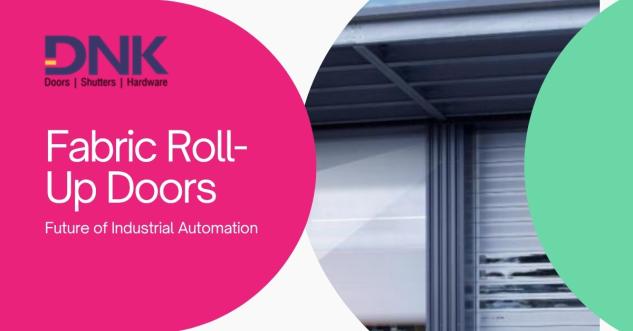
Why Fabric Roll-Up Doors Are the Future of Industrial Automation
1. The Need for Speed and Efficiency
Traditional metal or sectional doors often slow down production lines due to their heavy design and sluggish movement. Fabric roll-up doors, on the other hand, are engineered for rapid opening and closing, minimizing air exchange and maximizing productivity. In automated systems, where every second counts, their high-speed operation seamlessly synchronizes with conveyors, robotic arms, and material-handling equipment.
2. Energy Efficiency and Climate Control
Industrial facilities often face energy loss due to frequent door operation. Fabric roll-up doors create tight seals that prevent air leakage, maintaining stable temperatures in climate-controlled zones such as food processing units, clean rooms, or cold storage areas. Their insulated fabric materials further enhance energy savings — a major advantage in today’s sustainability-focused industries.
3. Enhanced Safety and Reduced Downtime
Safety is a top priority in automated environments. Fabric roll-up doors are built with soft edges and sensor-based safety systems that detect obstacles, preventing accidents and equipment damage. Moreover, their self-repairing design allows the curtain to reset itself after accidental impacts — minimizing downtime and maintenance costs.
4. Durability with Minimal Maintenance
Despite being lightweight, high-speed fabric doors are incredibly durable. They resist wear, corrosion, and harsh environmental conditions, making them ideal for heavy-duty industrial use. With fewer mechanical parts and no rigid panels, they require less maintenance, reducing the total cost of ownership over time.
5. Seamless Integration with Automation Systems
Modern industrial automation thrives on connectivity. Fabric roll-up doors from DNKME Engineering can be integrated with PLCs, motion sensors, and access control systems, enabling fully automated door operations. Whether it’s a robotic forklift or a conveyor-based production line, these doors enhance workflow precision and efficiency.
6. Future-Ready Design for Modern Industries
As industries move toward Industry 4.0, intelligent infrastructure is becoming standard. Fabric roll-up doors align perfectly with this shift — offering smart sensors, remote control, and data integration capabilities that support predictive maintenance and process optimization.
Conclusion
Fabric roll-up doors represent more than just an entryway — they’re a technological upgrade that aligns with the evolving needs of automated industries. From speed and energy efficiency to safety and integration, these doors redefine what’s possible in industrial automation.
At DNKME Engineering, we specialize in delivering high-performance fabric roll-up doors engineered for reliability, durability, and seamless automation. Future-proof your facility today — because the next revolution in industrial efficiency starts with your doors.