Different Types of Aircraft Hangar Doors Explained
In this blog, we explain the different types of aircraft hangar doors and their applications to help you make an informed decision.
1. Sliding Hangar Doors
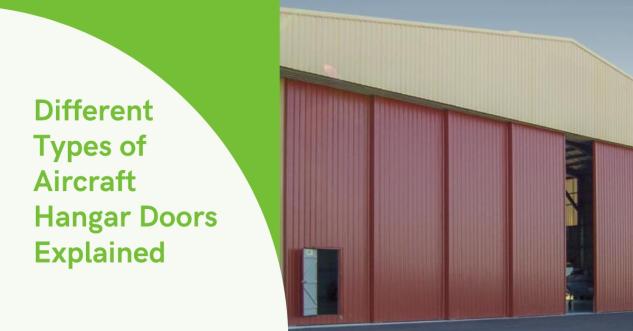
Sliding hangar doors are one of the most commonly used door systems in aviation facilities. These doors move horizontally along a track system and can be configured as single-panel or multi-panel doors.
Key Features:
-
Suitable for very large hangar openings
-
Cost-effective compared to complex automated systems
-
Can be manually operated or motorized
Best For:
Commercial aircraft hangars, cargo hangars, and large MRO facilities.
Leading Hangar Doors Manufacturers often customize sliding doors with wind locks and insulation for improved performance in harsh weather.
2. Bi-Fold Hangar Doors
Bi-fold hangar doors consist of two large panels that fold upward when opening. They are popular for both commercial and private aviation hangars.
Key Features:
-
Vertical opening saves apron space
-
Strong structural design for wind resistance
-
Quick opening and closing operation
Best For:
Business jet hangars, private aircraft hangars, and regional airports.
Reliable Hangar Doors Manufacturers design bi-fold doors with advanced lifting mechanisms to ensure smooth and safe operation.
3. Hydraulic Hangar Doors
Hydraulic hangar doors use powerful hydraulic cylinders to lift the door outward and upward, creating a canopy-like structure.
Key Features:
-
High load-bearing capacity
-
Minimal internal framing required
-
Can act as a sunshade when open
Best For:
Military hangars, large private aircraft hangars, and special aviation facilities.
Many premium Hangar Doors Manufacturers offer hydraulic systems with safety locks and weather-sealed edges.
4. Vertical Lift Hangar Doors
Vertical lift doors open straight upward and rest parallel to the hangar ceiling. These doors are engineered for high-cycle operations.
Key Features:
-
Maximizes clear opening height
-
Smooth automated operation
-
Suitable for frequent use
Best For:
Busy airports, maintenance hangars, and aviation training centers.
Professional Hangar Doors Manufacturers integrate advanced automation and control systems for efficiency and safety.
5. Fabric Hangar Doors
Fabric hangar doors use high-strength, weather-resistant fabric supported by steel frames. They are lightweight and flexible in design.
Key Features:
-
Faster installation
-
Lower structural load on the building
-
Cost-effective solution for large spans
Best For:
Temporary hangars, remote airstrips, and seasonal aviation operations.
Trusted Hangar Doors Manufacturers use aviation-grade fabric materials to ensure durability and UV resistance.
6. Rolling Hangar Doors
Rolling hangar doors operate similarly to industrial rolling shutters but are designed for much larger openings.
Key Features:
-
Space-saving design
-
High-speed operation
-
Excellent security features
Best For:
Smaller aircraft hangars and auxiliary aviation buildings.
Experienced Hangar Doors Manufacturers reinforce rolling systems to withstand wind pressure and frequent use.
Choosing the Right Hangar Door
Selecting the right aircraft hangar door requires expert assessment of:
-
Aircraft dimensions
-
Hangar structure
-
Environmental conditions
-
Operational frequency
Working with established Hangar Doors Manufacturers ensures customized solutions, compliance with aviation standards, and long-term reliability.
Conclusion
Understanding the different types of aircraft hangar doors helps aviation facility owners make smarter, future-proof investments. From sliding and bi-fold doors to hydraulic and fabric systems, each type serves a specific purpose. Partnering with reputable Hangar Doors Manufacturers guarantees high-quality engineering, safety, and performance tailored to your aviation needs.